
4HNE is a cause of obesity in humans. It tells your cells to store energy as fat. Too much 4HNE in your diet means too much fat storage, obesity. I'm not saying it's the only cause, but it absolutely makes humans fat. And it does this independently of calories.
4HNE converts cells from energy-burning mode to fat-storage mode, in a dose-dependent manner. More 4HNE means more fat storage. Anything that raises 4HNE in the body leads to more obesity; anything that lowers it leads to less.
Where 4HNE comes from
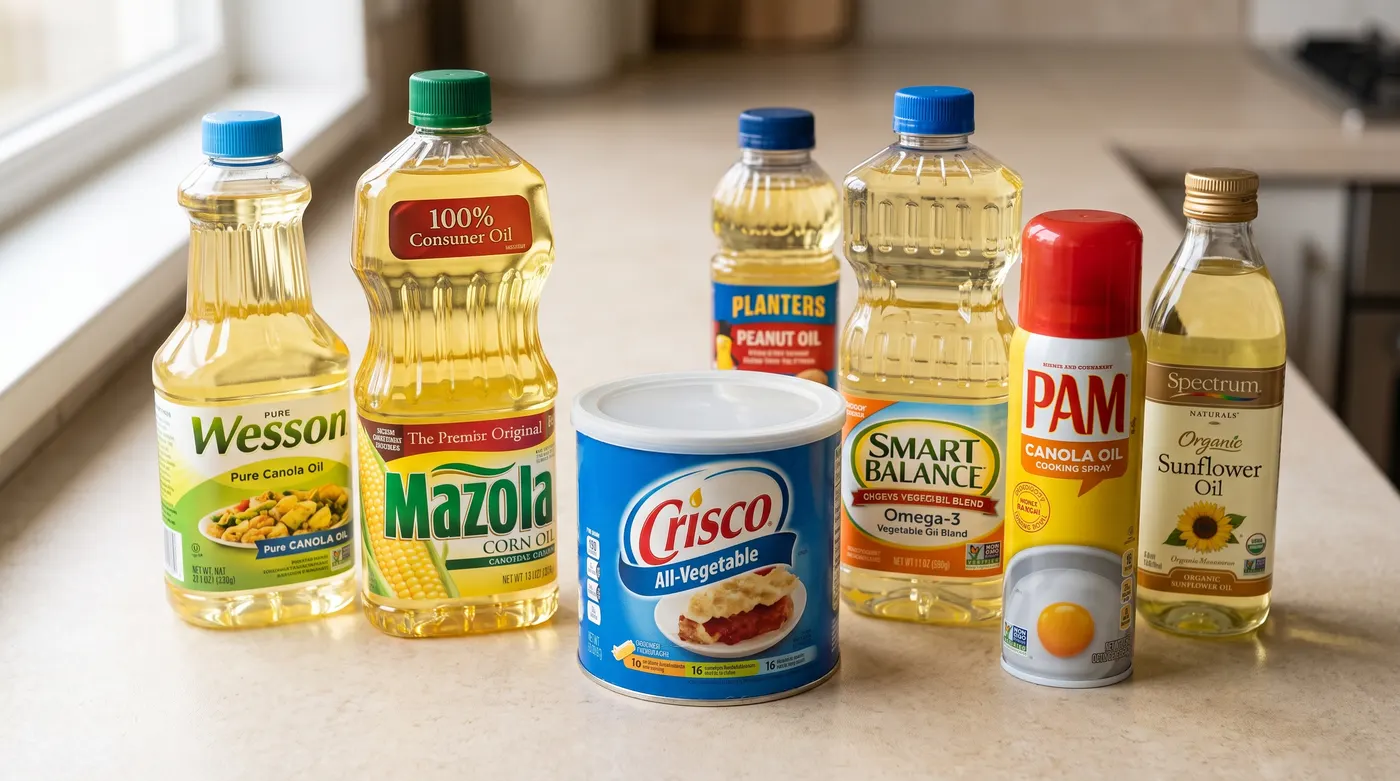
4HNE (4-hydroxynonenal) forms when Linoleic Acid, an omega-6 fat found in seed oils, breaks down under heat or over time inside your body. It's an OXLAM (oxidized linoleic acid metabolite), and the most toxic one. The only way it gets into your body is by eating foods that contain linoleic acid or 4HNE itself.
The epidemiological signal
Populations that eat less than 5 grams of linoleic acid a day have obesity rates under 1%. Populations eating more than 5 grams a day can see obesity rates climb as high as 60%. That doesn't prove causation on its own, but the signal has to be there before the hypothesis goes any further.
How 4HNE drives fat storage at the cellular level
In 2001, researchers treated single-cell yeast with small amounts of 4HNE. Untreated cells stored almost no fat; treated cells accumulated significant fat within two hours, and after 11 days had either stored fat or died.
In 2008, the experiment scaled to C. elegans roundworms. The more 4HNE they were given, the fatter they got, and removing it made them lean again without changing how much they ate.

Adding or removing 4HNE increased or decreased obesity in a dose-dependent manner, independent of how much the worms ate.
Mice that can't clear 4HNE get fat on the same calories
Mice with a genetic defect that impairs 4HNE clearance accumulate higher levels of it, and grow fatter than normal mice eating identical diets. Giving those mice a compound that clears 4HNE from their bodies reversed it: they lost the fat and returned to normal weight, still eating the same calories the whole time.
Humans carry an equivalent mutation, ALDH2*2, that impairs 4HNE clearance. As predicted, carriers show higher obesity rates. Separately, obese people measured directly were found to have roughly 300% more 4HNE in their bodies than non-obese people.
Seed oils, heat, and repeated frying
Seed oils are high in linoleic acid. Heating that oil oxidizes it into 4HNE, and the more times an oil is reheated, the more 4HNE it accumulates. In one study, rabbits fed the most-heated, highest-4HNE oil got fattest despite eating fewer calories than other groups. Food fried in seed oils carries the highest 4HNE levels of any common human food, and the more fried food in a diet, the more likely obesity becomes.

Glutathione: your body's 4HNE clean-up crew
Glutathione helps clear 4HNE from the body. Studies from 2018-2024 consistently link higher glutathione levels to better weight-loss outcomes, patients with more glutathione lost 8-12% more weight, while patients with less had more insulin resistance and worse metabolic markers. That tracks: 4HNE itself damages the pancreas, liver, and muscle receptor sites that regulate insulin. Raising glutathione, through compounds like NAC and glycine, or through exercise, which also helps clear 4HNE, should improve fat loss if the hypothesis holds. It does.
The clearest proof: how scientists make lab animals obese
When researchers need obese animals to study, they don't overfeed them. They just raise the linoleic acid in the diet to 20%+ of calories. That's the entire protocol, dial up linoleic acid, and obesity follows.
4HNE and other OXLAMs have also been linked to heart disease, cancer, diabetes, and Alzheimer's. Linoleic acid has a long half-life in the body, around 680 days, and can take up to six years to mostly clear once you stop eating it regularly.
What this means for you
4HNE causes fat storage independent of calorie intake, in a dose-dependent way.
The only way 4HNE enters your body is through foods containing linoleic acid, mainly seed oils.
Getting daily linoleic acid under 5 grams appears to be a dose the body handles without tipping into obesity.
Clearing existing 4HNE, through diet change, glutathione support, and exercise, can reverse fat storage even without cutting calories.
The average American gets about 8% of calories from linoleic acid, 10 to 20+ grams a day, and more than half of us are overweight or obese. When Americans ate under 5 grams a day, obesity was rare enough that it was a circus attraction. Now it's the majority.
It's not just seed oils
4HNE is a major, underrated driver, but it's rarely the whole story. In practice we see these causes stack on top of each other, which is why a real evaluation looks at all of them, not just diet.
Estrogen, testosterone, and cortisol imbalances change where and how easily your body stores fat, independent of what's on your plate.
An underactive thyroid slows metabolism and drains energy, so you burn less and move less, often without any change in eating.
Insulin resistance and PCOS push the body to store fat and hold onto it, and affect roughly 1 in 10 women.
Poor digestion and gut inflammation limit nutrient absorption and disrupt the signals that regulate hunger and fullness. Read more →
That's why SlimRX starts with diagnostic bloodwork, not a diet sheet, so your plan targets what's actually driving your weight. See how we approach fixing it →
Referenced Research
Frequently Asked Questions
What is 4HNE?
4HNE (4-hydroxynonenal) is a toxic byproduct formed when linoleic acid, an omega-6 fat common in seed oils, breaks down under heat or inside the body. It signals cells to store fat instead of burning it.
Does 4HNE cause weight gain independent of calories?
Yes. Studies in mice, roundworms, and rabbits show 4HNE increases fat storage in a dose-dependent way even when calorie intake is held constant.
How can I lower 4HNE in my body?
Cut dietary linoleic acid, mainly from seed oils and fried food, to under 5 grams a day, support glutathione through diet, NAC, or glycine, and exercise regularly to help clear it.
Does SlimRX treat 4HNE-driven weight gain?
Yes. Our Mount Pleasant, SC clinic, serving the greater Charleston area, builds programs around fixing the underlying metabolic chemistry, not just cutting calories, so weight loss lasts.
Now, how do you fix it?
Cutting the oils that create 4HNE, raising glutathione, moving your body, and getting the right medical support. We laid out the exact steps, and how SlimRX can help with each one.
Read: How To Fix It →Book Your Free Consultation